
Mastering Careers & Skills
HVAC Technician Certificate (NATE) · free sample from the book itself
Google Play Books Exam Prep Series
Built on North American Technician Excellence's (NATE) published examination architecture for NATE Certification, as NATE publishes that architecture for candidates: the Traditional pathway's two sittings, their sizes, times, content allocations, delivery routes, and maintenance rules, each stated in this front matter in the form NATE publishes it and each traceable to the source register recorded in the References at the back of this book. Confirm every candidacy fact — fees, dates, and any requirement of your own state — with NATE and with your Testing Organization before you arrange a sitting, because NATE revises its publications and the current publication always governs over any book, including this one.
About this book's counts — measured on the finished files: this book carries 174,514 words of chapter prose across its 22 chapters; 920 explained practice items (50 in the diagnostic, 420 in the 21 chapter quizzes, 300 in the two full practice journeys — 150 in each journey — and 150 in the six repair sets); 51 labeled figures (33 plates of physical subject matter and 18 analytical diagrams); and a glossary of 245 entries. Examination facts are a different kind of statement: an examination fact prints only in the form its source publishes it, with its source named.
HVAC Technician Certificate (NATE). Designed to the NATE Core Exam KATE and the Air-to-Air Heat Pump Service KATE (version 2.7), and to the NATE candidate pages recorded in the References at the back of this book, as read on November 2, 2026. A dated production re-verification of those sources is recorded in the Errata and Edition Note at the back of this book; where that note records a changed fact, the changed fact governs.
Copyright © 2026 Feras Alzubi.
All rights reserved. No part of this book may be reproduced or transmitted in any form or by any means without the publisher's prior written permission, except for brief quotations in a review.
About the author of record. This study guide's author of record writes for the Google Play Books Exam Prep Series. The series builds each book from the credentialing body's own published documents, read in full and recorded in a source register, and teaches the whole field the credential stands in — not only the examination's outline — so that a reader who owns the book needs no second study source for the examinations the book targets.
Edition bases — read this page before you rely on any figure in this book. This edition rests on NATE's candidate-facing publications for NATE Certification: the Core Exam KATE, the Air-to-Air Heat Pump Service KATE (version 2.7), the Technician Handbook, and NATE's Getting Started, Traditional Pathway, Certified HVAC Professional (CHP-5), Entry Level Certificates, Live Online Proctoring, Policies and Fees, Professional Certification Exams, and Low-GWP Refrigerant Certification Exam pages, together with the U.S. Environmental Protection Agency's Technology Transitions page for the refrigerant frame stated in Chapters 11 and 21. Three currency rules govern the whole book. First, NATE's current publications control every examination and candidacy fact — pathway structure, item counts, times, content allocations, fees NATE itself publishes, retake rules, and recertification. Where an older document, a training handout, or a preparation website states a different form of any of those facts, NATE's current publication governs and this book prints the current form. Second, your state and local authorities control every state and local fact that is theirs to set — codes in force where you work, and any state registration or licensing that applies to you. NATE Certification is an industry credential, not a state license, and this book prints no state's rule as if it were NATE's. Third, federal law controls refrigerant work. Handling refrigerant in the ways federal law governs requires the separate federal credential named at the boundary in Chapter 1; this book teaches knowledge and method and never substitutes for that credential, for the codes in force where you work, or for supervised work on the job.
This book is an independent study guide. It is not published by, affiliated with, endorsed by, or approved by North American Technician Excellence (NATE), and NATE did not participate in its creation. Exam names and trademarks belong to their respective owners. NATE®, the NATE Core exam, and the NATE specialty examination names are identified in this book as NATE's marks at first use and thereafter for identification of the examinations this book prepares the reader for. Passing any exam also depends on the candidate's own preparation; no book can guarantee a result.
Every practice item in this book is original, written fresh for this book against NATE's published Knowledge Areas of Technician Expertise (KATEs) — the Core Exam KATE and the Air-to-Air Heat Pump Service KATE (version 2.7) — and against the field knowledge those outlines stand in. No item reproduces, paraphrases, or adapts an actual NATE examination question, and no item comes from another preparation book, course, or question bank. Every item carries a keyed answer, an explanation of why the key is right, an explanation of why each wrong answer is wrong, and a pointer to the chapter section that repairs the gap the item exposes. The crosswalk in Appendix B runs at the grain NATE publishes — section titles, published percentages, and topic names — and reproduces no KATE text.
This book prepares the candidate for two sittings — the NATE Core exam and the NATE Air-to-Air Heat Pump Service specialty exam — and for no other NATE sitting. That sentence is the book's boundary rule, and it governs every chapter, every practice form, every crosswalk table, and every count in this book. A reader who completes this book has been taught and tested for exactly that Traditional-pathway journey, taught whole: the field's foundations from zero, the Core's seven knowledge areas at their published weights, and the specialty's four sections at theirs, plus the heating field beyond the heat pump that a working technician meets on the job.
This book is not a NATE product. It confers no certification, no certificate, no training hours, and no continuing education hours. Certification is NATE's alone to award, and NATE awards it only when both sittings in the chosen pathway have been passed. This book is also not preparation for any other NATE sitting: the other specialties, the CHP-5 route, the entry-level certificates, and the professional examinations are mapped in Appendix A — what they are, who they are for, and their published shapes where NATE publishes them — so the reader can choose a next step with open eyes, but no practice form, composition table, or crosswalk in this book claims their shapes, and studying this book must not be represented to an employer, a customer, or NATE as preparation built to any other sitting's outline. For EPA Section 608 certification, the reader needs that separate federal credential and preparation built to it; Chapter 1 states that boundary in full, and the book observes it throughout. For the work itself, this book teaches knowledge and method; live refrigerant, combustion, and electrical work is performed on the job, under the codes in force where the reader works and the supervision the law and the employer provide.
The NATE Core exam presents 50 questions in 1.5 hours, closed book. The NATE Air-to-Air Heat Pump Service specialty exam presents 100 questions in 2.5 hours, closed book. Both sittings are scored Pass/Fail. NATE establishes passing scores through a Passing Score Study, and the passing score for different test forms may vary slightly with the comparative difficulty of the questions; NATE publishes no numeric passing score, percentage, or scaled score for either sitting, and this book prints none and converts no practice result into a pass prediction. Practice results in this book are reported as raw counts by content section, with routing to the chapters and repair sets that address each section.
The Core exam's published content allocation is: Safety 18 percent, Tools 10 percent, Basic Construction 8 percent, Using Basic Science 10 percent, Achieving Desired Conditions 14 percent, Taking Temperature and Humidity Measurements 14 percent, and Basic Electricity 26 percent. The Heat Pump Service specialty's published content allocation is: Installation 20 percent, Service 42 percent, System Components 21 percent, and Applied Knowledge 17 percent. The specialty's published scope covers heat pump systems of 30 tons or less cooling capacity. This book's diagnostic, chapter quizzes, practice journeys, and repair sets mirror these allocations exactly as Chapter 1 and the blueprint pages explain.
The two sittings are separate. A candidate may take them in either order. A passed credit in either sitting holds for two years while the other is completed; certification is not awarded until both are passed, and a candidate who does not pass one sitting retakes that sitting. Delivery is in person through a NATE Testing Organization, by paper session or proctored online session, or remotely by Live Online Proctoring through Meazure Learning's ProctorU platform, ordered in the candidate's myNATE account. Photo identification is required at every sitting. In Testing Organization sessions a non-programmable calculator is permitted; in Live Online Proctoring only the built-in calculator may be used, with two sheets of blank scratch paper and one writing utensil permitted. Results of online sessions are available immediately; results of paper sessions arrive in about two weeks.
There are no formal educational requirements for NATE Certification, and anyone may arrange to take the tests through a Testing Organization or, for Live Online Proctoring, through myNATE, signing NATE's Code of Conduct before testing and presenting photo identification at the sitting. NATE recommends — as recommendations, never as requirements — some formal training before sitting, two years of experience for the Core and Specialty certification examinations, and, in the Heat Pump Service outline, one year of field experience on heat pump systems as a service technician plus technical training. Chapter 1 prints requirements and recommendations separately and never blends them.
NATE publishes no single national dollar fee for the Core, Specialty, CHP-5, or HVAC Support Technician sittings: Testing Organizations collect their own fees for in-person sittings, and Live Online Proctoring pricing is shown in the myNATE account's LOP tab. This book therefore prints no dollar fee for those sittings and no total cost of certification, and directs the candidate to the Testing Organization or the LOP tab for the current price of the sitting they arrange. The fees NATE does publish, and which this book prints with their sources, are the entry-certificate and maintenance fees mapped in Appendix A: the Ready-to-Work examination at $60 with retakes at $45 each, and recertification by continuing education hours at $30 for the first specialty plus $5 for each additional specialty, under the companion rules Appendix A states. Recertification of NATE Certification falls due every two years: submit 16 continuing education hours with the renewal fee, or retake the specialty examination only, before expiration or within the 120-day grace period; past the grace period, the candidate restarts with the Core and specialty examinations.
Front matter: title page and disclosures; copyright and version page; Exam Blueprint page; How to Use This Book; the two study plans; the diagnostic and its score-by-section tracker. Chapter 1, The Examinations, the Credential, and This Book. Chapter 2, Safety: The First Knowledge Area. Chapter 3, Tools, Instruments, and the Technician's Mathematics. Chapter 4, Basic Science: Heat, Pressure, Matter, and Air. Chapter 5, Basic Construction and Reading Plans. Chapter 6, Electricity I: Fundamentals, Circuits, and Ohm's Law. Chapter 7, Electricity II: Motors, Controls, and Wiring Diagrams. Chapter 8, Achieving Desired Conditions: Comfort, Humidity, and Indoor Air. Chapter 9, Temperature and Humidity Measurement. Chapter 10, System Components I: The Refrigeration Cycle and the Machines That Run It. Chapter 11, System Components II: Metering, Accessories, and Refrigerants. Chapter 12, The Heat Pump as a System: Reversing, Defrost, and Auxiliary Heat. Chapter 13, Controls and Thermostats. Chapter 14, Installation I: Equipment, Line Sets, Evacuation, and Charging. Chapter 15, Installation II: Duct Systems. Chapter 16, Airflow Measurement and Air Balancing. Chapter 17, Service I: Planned Maintenance and the Diagnostic Method. Chapter 18, Service II: Refrigerant-Circuit Diagnostics — Superheat, Subcooling, and the PT Chart. Chapter 19, Service III: Electrical Diagnostics and Component Testing. Chapter 20, Heating in the Field: Gas, Oil, Electric Heat, and Combustion Analysis. Chapter 21, Applied Knowledge: Codes, Standards, Design, and the Regulated Refrigerant World. Chapter 22, The Exam Layer: Two Sittings, Taken Well. Then the two full practice journeys, the six repair sets, the cheat sheets, the glossary, Appendix A (eligibility and architecture map), Appendix B (outline crosswalk), Appendix C (References), and the Errata and Edition Note.
Read in the order the book is built. Part I lays the credential and the foundations side by side: Chapter 1 gives you the journey whole, and Chapters 2 through 4 give you the safety system, the tools and mathematics, and the basic science every later chapter spends. Part II teaches the Core knowledge the first sitting examines. Part III teaches the heat pump specialty — components, the heat pump as a system, controls, installation, ducts, and airflow. Part IV teaches service: maintenance and method, refrigerant-circuit diagnostics, electrical diagnostics, and the wider heating field. Part V gathers applied knowledge and then teaches the examination layer itself in Chapter 22, after which the full practice journeys rehearse both sittings at their published shapes and clocks.
Every teaching chapter follows the same rhythm: simplify, explain, detail, show, do, check. The chapter opens by stating its question in plain words and naming what you will be able to do when you finish it. The teaching then builds from the plain core to the working explanation to the full detail, shows the knowledge at work in a worked example or a labeled figure at its teaching point, asks you to do a small unscored task with its answer in place, and closes with a 20-item chapter quiz. Take each quiz closed book, score it as a raw count, read every rationale in the key — including the rationales for items you answered correctly, because the wrong-answer explanations retire the confusions the real sitting will offer you — and repair any weak section in the chapter before moving on. Boxes throughout each chapter retire the chapter's characteristic errors explicitly, and a key-numbers strip at each chapter's end repeats every load-bearing figure the chapter used, with its source.
Take the diagnostic after Chapter 1 and before Chapter 2. It presents 50 items in 60 minutes — a 25-item Core-shape half and a 25-item specialty-shape half, scored separately by section — so that before you study you can see where you stand in each sitting's terms and let the weaker sections set your emphasis inside whichever study plan you follow. Score the diagnostic as raw counts by section only. No count in this book, on the diagnostic or anywhere else, is a pass prediction: the real sittings report Pass or Fail, and NATE publishes no number against which a practice count could honestly be compared.
Use figures as teaching, not decoration. Plates show the physical subject matter itself — the machine, component, instrument, or tool — labeled, at the point where the text teaches it, so that a reader who has never stood in front of the equipment can recognize it on the job and in a figure item. Diagrams show structure the eye cannot see directly: the cycle, the chart, the circuit, the sequence. When a quiz item names a plate, answer from the plate; the key tells you what on the plate decides the item.
A note on hands-on work governs every procedure in this book. Procedures are taught as knowledge and method — what the procedure is, the order of its parts, its safety conditions, and what correct results look like — because that is what the examinations test and what safe field judgment rests on. The book never instructs you to perform unsupervised live work. Refrigerant handling is framed by the federal rules Chapter 1 names at the boundary; brazing, combustion, and electrical procedures carry their safety conditions with them. Learn the method here; perform the work on the job, under the codes in force where you work and the supervision your employer and the law provide.
Plan A — Six weeks (the standard plan). Weeks 1 and 2: Part I and Part II, chapter by chapter, with each chapter quiz taken closed book on the day you finish the chapter; take the diagnostic after Chapter 1, and let its weaker sections decide which chapters in these weeks get a second reading. Weeks 3 and 4: Part III, at the same rhythm, with the figure plates studied as deliberately as the text — the specialty sitting examines equipment you must be able to recognize. Week 5: Part IV and Chapter 21. Week 6: Chapter 22; then Journey 1, its two sittings taken under their own clocks on separate days, as the real candidate sits them; then the repair sets aimed at your two weakest sections across both sittings; then Journey 2, completed two days before your target Core sitting. Throughout the plan, keep a single error log: every missed item, the misconception its rationale names, and the section that repairs it. The log, not the raw count, is the plan's steering instrument.
Plan B — Three weeks (for technicians whose field experience is recent and daily). This plan assumes you already work on heat pump systems: you handle the equipment, the gauges, and the controls in your working week, and what you need from the book is the examination's frame, the foundations stated exactly, and rehearsed sittings. Days 1 to 5: Parts I and II at quiz pace, one chapter and its quiz per study session, skipping no quiz even where the teaching feels familiar — familiarity with the work is not the same as fluency in the examination's grain. Days 6 to 11: Part III. Days 12 to 15: Part IV and Chapter 21. Days 16 to 21: Chapter 22, both journeys under their clocks on separate days, and the repair sets for your weakest sections in the days between and after them. If the diagnostic shows a foundations gap — in basic science, in electricity, or in measurement — do not stay on Plan B for that material: drop back to Plan A's pace for the chapters the diagnostic names, because a compressed plan cannot repair a foundation it rushes past. A reader new to the equipment uses Plan A.
Both plans end at the same detachable candidacy checklist, printed with Chapter 1: arrange each sitting with your Testing Organization or in myNATE; confirm the current fee where NATE directs you to confirm it; carry photo identification whose name matches your arrangements; know the calculator rule for the route you chose before you practice your final journey, and drill your calculations under that rule; remember that a passed companion credit holds for two years, so a disappointing first sitting is a study problem with time attached, not the end of the journey; and calendar your recertification — 16 continuing education hours and the renewal fee, or a specialty retake, every two years — on the day you are certified, not in the month it falls due.
Google Play Books Exam Prep Series — HVAC Technician Certificate (NATE). Designed to the NATE Core Exam KATE and the Air-to-Air Heat Pump Service KATE (version 2.7) and to NATE's candidate publications as read on November 2, 2026; the production re-verification date and its result are recorded in the Errata and Edition Note at the back of this book, and that note's standing rule — NATE's current publications govern over this book wherever they differ — applies to every page.
This chapter answers the questions every candidate actually arrives with: what exactly am I trying to earn, what exactly must I do to be allowed to try, what exactly happens at each sitting, and what exactly can this book do — and not do — for me? Most preparation failures on a certification journey are not knowledge failures. They are journey failures: a sitting arranged through the wrong route, a fee expected at a figure nobody publishes, a calculator practiced one way and forbidden the way the chosen route allows, a passed sitting left to expire while its companion waits, a neighboring credential mistaken for the one being prepared for. Chapter 1 exists so that none of those failures happens to you. It teaches the credential whole, the two sittings whole, the rules that connect them whole, and this book's honest position inside that system, before a single page of trade knowledge asks for your attention.
Learning objectives. When you finish this chapter you will be able to: state what NATE Certification is and what it is not; lay out the Traditional pathway as two separate sittings with their sizes, times, and published content allocations; distinguish a requirement from a recommendation without blurring either; state the fee position exactly as NATE publishes it, including the sentence most preparation books refuse to print; describe both delivery routes and the calculator discipline each one imposes; state the retake rule and the two-year companion credit; state the recertification cycle whole; place the entry certificates, the CHP-5 route, the other specialties, and the professional examinations on one map without mistaking the map for preparation; state the EPA Section 608 boundary in one sentence; and use this book's diagnostic, quizzes, journeys, repair sets, and study plans as the single system they were designed to be.
Content frame. This chapter is orientation to both target examinations — the NATE Core exam and the NATE Air-to-Air Heat Pump Service specialty exam. It samples no field content of its own. Everything in it is the frame inside which the field content of Chapters 2 through 21 is examined, and its quiz therefore tests method and orientation only: the journey, the rules, and how to use this book. Facts about heat, electricity, refrigerants, and equipment belong to the chapters that teach them, and this chapter's quiz asks for none of them.
Source note. Every candidacy, fee, timing, and examination fact in this chapter rests on NATE's own publications: the Getting Started, Traditional Pathway, Certification Pathways, Entry Level Certificates, Live Online Proctoring, Policies and Fees, Professional Certification Exams, and Low-GWP pages, the Technician Handbook, and the Core and Heat Pump Service KATEs, each recorded in Appendix C. Where a number appears, the text names the kind of source it came from, and Appendix B and the References let you find the document itself.
NATE Certification on the Traditional pathway is earned by passing two examinations. The first is the Core exam: 50 questions, 1.5 hours, closed book, sampling the knowledge every HVACR technician shares — safety, tools, construction, basic science, comfort, measurement, and above all basic electricity. The second is one specialty exam: 100 questions, 2.5 hours, closed book, sampling one field of practice at depth. This book's specialty is Air-to-Air Heat Pump Service, the specialty that examines the whole refrigeration cycle in both directions, cooling and heating from one machine. The two examinations are separate sittings. You may take them in either order. A pass in either one stays valid for two years while you complete the other. NATE reports each sitting as Pass or Fail and publishes no numeric score. When both are passed, you are NATE-certified in that specialty, and you maintain the certification in two-year cycles for as long as you hold it. That paragraph is the whole journey. The rest of this chapter is the same journey with every joint and condition made explicit, because candidates are rarely beaten by the paragraph — they are beaten by a joint they never saw.
NATE — North American Technician Excellence — is the HVACR industry's credentialing body. It writes the examinations, publishes the outlines those examinations follow, works through Testing Organizations and a remote proctoring service to deliver the sittings, awards the certification, and maintains the rules by which certificants keep it. NATE Certification says something specific and valuable: an independent body examined this technician's knowledge, across a published outline, under closed-book conditions, and the technician met the standard the body's passing-score process sets. Employers recognize it because the standard is not the employer's own, customers are told about it because it is verifiable, and technicians pursue it because it travels — the credential belongs to the technician, not to one shop's internal judgment of them.
Three negations matter as much as the definition, and this book prints them wherever the confusion could cost you. First, NATE Certification is not a state license. No state issues it, no state requires it as such, and it authorizes nothing by itself in any jurisdiction. Some states and localities separately register, license, or otherwise regulate HVAC work or the businesses that perform it, under their own rules, fees, and deadlines. This book prints no state's rule, because no state's rule is NATE's to state or this book's to teach; Chapter 21 teaches the working rule instead — know and follow the code and the requirements in force where you work, and get them from the authority that issues them. Second, the credential is not any other NATE product. The entry certificates of section 1.7 are certificates, not certification, and NATE says so in terms; holding one does not make a technician NATE-certified, and this book never lets the words trade places. Third, passing one sitting is not certification. A passed Core with no specialty, or a passed specialty with no Core, is a credit with a two-year life — a real achievement and a wasting asset at the same time. Certification exists only when both halves exist together, inside the window that connects them.
The Core exam presents 50 questions in 1.5 hours, closed book. Its published content allocation names seven knowledge areas: Safety at 18 percent, Tools at 10 percent, Basic Construction at 8 percent, Using Basic Science at 10 percent, Achieving Desired Conditions at 14 percent, Taking Temperature and Humidity Measurements at 14 percent, and Basic Electricity at 26 percent. Read the allocation the way a study plan should read it. Basic Electricity alone is more than a quarter of the sitting — thirteen of its fifty questions at the published weight — which is why this book gives electricity two foundation chapters and a diagnostics chapter rather than a section. Safety, at nine questions' weight, is the second investment. The two measurement-and-comfort areas together outweigh the whole science and construction block. Chapter 22 turns this allocation into pacing, and the practice journeys in this book reproduce it exactly: a Core journey sitting in this book carries its fifty items as nine, five, four, five, seven, seven, and thirteen across the seven areas, because rehearsing a differently shaped sitting would rehearse a different examination.
The Heat Pump Service specialty exam presents 100 questions in 2.5 hours, closed book, on systems of 30 tons or less cooling capacity. Its published allocation names four sections: Installation at 20 percent, Service at 42 percent, System Components at 21 percent, and Applied Knowledge at 17 percent. Service is the specialty's center of gravity by a wide margin — forty-two of one hundred questions — and that single fact organizes Part IV of this book and the largest repair set family you will meet. The specialty's Heat Pump Service and Installation certifications carry a distinction no other specialty in any NATE publication read for this book carries: NATE records them as recognized by the U.S. Department of Energy as Energy Skilled. The specialty also carries its own experience suggestion, stated in section 1.5 with the other recommendations, in the recommendation's own terms.
Both sittings share the same scoring form, and the form deserves a paragraph of its own because the preparation shelf routinely misstates it. NATE scores each sitting Pass or Fail. The passing standard is established through a Passing Score Study — a systematic procedure by which the body sets the standard for the examination — and NATE states that the passing score for different test forms may vary slightly with the comparative difficulty of the questions on them. NATE publishes no numeric passing score: no percentage, no scaled value, no count of questions a candidate must answer correctly. Any website, video, or book that quotes you such a number for these sittings is quoting something NATE does not publish, and this book treats every such figure as what it is — an unverified claim that prints nowhere in these pages, in any chapter, item, rationale, scoring page, or summary. The practical consequence is developed as method in Chapter 22 and previewed here because it shapes how you will use every score this book gives you: since no honest target number exists, preparation aims at coverage and repair — every section studied, every weak section found and fixed — and practice results are read as raw counts by section, never as a forecast.
A candidate arranges an in-person sitting through a NATE Testing Organization — a testing center in NATE's network that hosts paper sessions and proctored online sessions — or arranges Live Online Proctoring through their own myNATE account, where the LOP tab is where the sitting is ordered and paid for. Remote sittings are administered through Meazure Learning's ProctorU platform and require the Guardian Browser, a room scan, a webcam and microphone, and government photo identification bearing a signature. Arrive about thirty minutes early for an in-person session. Carry photo identification to every sitting, of either route, and make sure the name on your arrangements and the name on your identification are the same name, because the sitting's staff or proctor checks the one against the other before the examination opens.
Two route differences change how you should practice, and Chapter 22 builds a drill rule on each. The first is the calculator. In a Testing Organization session, a non-programmable calculator is permitted. In Live Online Proctoring, no physical calculator enters the sitting at all: only the proctoring platform's built-in calculator may be used, alongside two sheets of blank scratch paper and one writing utensil. A candidate who has only ever drilled calculations on a familiar physical calculator, and who then sits remotely, meets an unfamiliar tool under a running clock; a candidate who has only ever drilled on screen, and who then sits in person, wastes a permitted advantage. This book's calculation families are therefore designed to be worked both ways, and Chapter 22 tells you to rehearse your final journey under the discipline of the route you actually chose. The second difference is the sitting's physical terms: Live Online Proctoring permits no restroom breaks, requires rescheduling at least twenty-four hours ahead through ProctorU if you must move the sitting, and refunds nothing for a no-show. Results differ by session kind rather than by route in the way candidates usually expect: online sessions report immediately, on screen and in myNATE, while paper sessions report in about two weeks. Before any sitting, of either route, the candidate signs NATE's Code of Conduct — the profession's own statement of honest conduct in testing and in work — and Chapter 17 returns to that code where it belongs, inside professional practice.
This book prints eligibility the way NATE publishes it, in two separate columns that are never allowed to merge, because merging them is the single most common eligibility error on the preparation shelf: a recommendation, printed as a requirement, frightens an eligible candidate out of sitting; a requirement, printed as a suggestion, sends an unprepared candidate in uninformed. The requirement column is short. There are no formal educational requirements for NATE Certification. Anyone interested in obtaining it may take the tests, provided they have contacted and made arrangements with the Testing Organization — or ordered the remote sitting through myNATE — sign the Code of Conduct before testing, and present photo identification at the sitting. Candidates who need testing accommodations request them from NATE at least forty-five days before the session; that lead time is a requirement of the accommodation process, and it is the only clock in this section that can quietly expire on a candidate who did not know it existed.
The recommendation column is longer, and every entry in it is NATE's advice, printed as advice. NATE suggests that candidates have some formal training — from an employer, a technical school, or another institution — before sitting. NATE suggests two years of experience for the Core and Specialty certification examinations. The Heat Pump Service outline suggests, for its own sitting, one year of field experience working on heat pump systems as a service technician, together with technical training. Read those suggestions the way they are meant: they describe the candidate the examinations were designed around — a working technician whose daily practice has already taught their hands what the book must teach their judgment — and they tell a newer candidate, honestly, that the examinations will assume a familiarity that study alone must then work harder to build. They do not describe a gate. No Testing Organization will ask you to prove two years before it seats you, no page of this book will tell you that you may not begin, and the study plans in the front matter are written for both readers: Plan A for the candidate building the foundation deliberately, Plan B for the technician whose recent daily work already supplies much of what the recommendations point at.
One absence belongs in this section because candidates ask about it directly: no age requirement or recommendation appears in any NATE publication read for this book, and this book therefore prints no age rule of any kind. Where a book is silent because its sources are silent, the silence is the accurate statement, and inventing a plausible-sounding rule to fill it would be a small dishonesty of exactly the kind this chapter exists to retire.
Here is the honest sentence, printed whole because this book's method requires it: NATE publishes no single national dollar fee for the Core exam, for any specialty exam, for the CHP-5 sittings, or for the HVAC Support Technician sitting. For in-person sittings, candidates pay the Testing Organizations directly, and Testing Organizations set what they collect. For Live Online Proctoring, pricing lives in the myNATE account's LOP tab, and NATE's own instruction to candidates is to check the LOP tab of their NATE account for current pricing. It follows that any book, site, or video quoting you one national price for the Core sitting or the specialty sitting is quoting, at best, one route's price on one day, presented as a universal fact — and at worst, a figure with no source at all. This book prints no such figure, draws no total cost of certification from one, and directs you, for the price of your own sittings, to the only two sources that can actually charge you: your Testing Organization, or the LOP tab in your myNATE account. Check the price when you arrange the sitting, from the party that will collect it, and budget from that figure.
What NATE does publish as fixed figures, this book prints with the same exactness, and Appendix A gathers them on the architecture map: the Ready-to-Work entry examination at $60, with retakes at $45 each and a complimentary downloadable study guide included when the examination is ordered; and recertification by continuing education hours at $30 for the first specialty plus $5 for each additional different specialty, under the companion rules — Heat Pump recertification carrying Air Conditioning recertification with it at no cost, and Service recertification carrying Installation recertification with it at no cost — that Appendix A states in full. Those figures belong to other parts of the map than the two target sittings, and their presence here teaches the method by contrast: where NATE publishes a number, this book prints the number and names its source; where NATE publishes a direction instead of a number, this book prints the direction. A preparation book that respects its reader does not confuse the two.
A candidate who can see the whole map makes a cleaner decision about the one journey on it that is theirs, so this section walks the map once, at the grain Appendix A carries in full. Below certification sit two entry-level certificates. Ready-to-Work serves the technician just entering the field: fifty questions, 1.5 hours, online only, unproctored, $60 with $45 retakes, a certificate rather than a certification, valid five years and renewed by retaking. The HVAC Support Technician certificate serves the technician with roughly six months to a year in the field: a proctored sitting of 2.5 hours at a Testing Organization, examining professional-level topics at a fundamental level, likewise a certificate rather than a certification, likewise valid five years and renewed by retaking; NATE publishes no item count and no fixed fee for it on the pages read for this book, and this book leaves both cells honestly unfilled rather than borrowing figures from anywhere else. Neither certificate is a prerequisite for certification — a point worth its own sentence, because secondary sources sometimes claim otherwise and no NATE publication read for this book supports the claim. The certificates are on-ramps a new technician may use; the certification examinations are open to the candidate who is ready without them.
Figure 1.1 (Figure A-17 — The NATE certification pathway map). The whole architecture on one page: the two entry certificates as optional on-ramps at the map's base; the two routes to NATE Certification beside each other — the Traditional route this book teaches (Core exam, 50 items; Heat Pump Service specialty, 100 items) and the CHP-5 route (five exams of 30 items) reaching the same certification; additional specialties and the Senior Level Efficiency Analyst above certification; and recertification every two years (16 continuing education hours plus the fee, or a specialty retake) closing the loop at the map's foot. Alt text: Diagram of the NATE certification architecture showing entry certificates, the Traditional and CHP-5 routes to certification, additional specialties, the Senior Level Efficiency Analyst, and two-year recertification, each stage labeled.
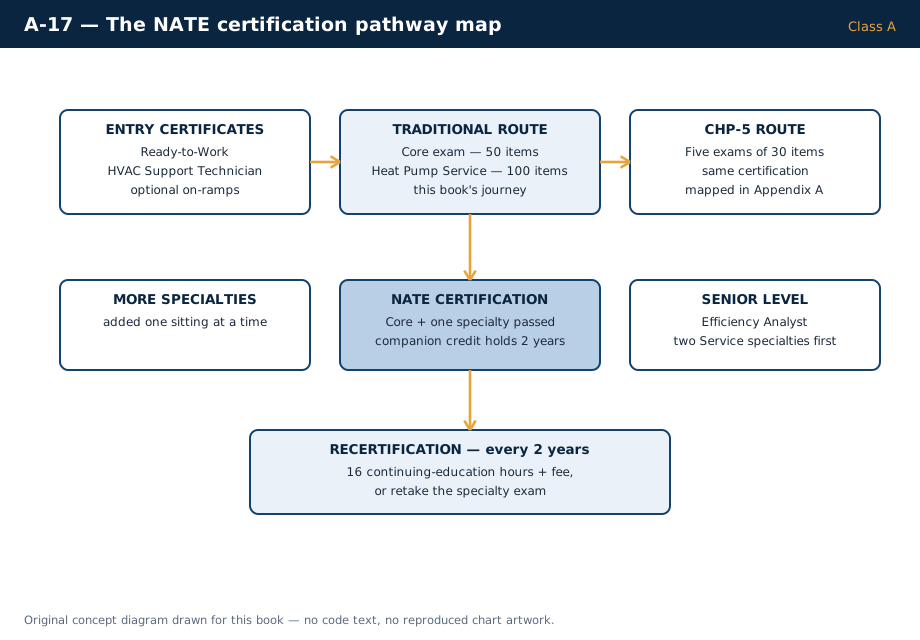 Figure 1.1 (Figure A-17 — The NATE certification pathway map))
Beside the Traditional pathway stands its alternative: the CHP-5 pathway, five examinations of thirty questions each — HVAC Fundamentals; Electrical and Controls; Comfort and Airflow; Installation; and Service — taken in any order, with up to six months between each, reaching the same NATE Certification at the end. NATE states that the Traditional pathway is not being removed alongside it. This book maps CHP-5 so that you can choose between the routes knowingly — one journey of two substantial sittings against one journey of five smaller ones — and then it prepares you for the Traditional route only, because a book's practice forms can honestly rehearse only the sittings whose published shapes they reproduce. Above and beside certification sit the other specialties, which a certified technician may add one by one: Installation specialties in Air Conditioning, Air Distribution, and Gas Heating beside this book's Heat Pump Installation counterpart, and Service specialties in Air Conditioning, Air Distribution, Gas Heating, Oil Heating, Hydronics Gas, Hydronics Oil, Light Commercial Refrigeration, and Commercial Refrigeration beside this book's Heat Pump Service. Each has its own published outline. The field chapters of this book teach a great deal that those specialties share — a heat pump is an air conditioner whose cycle reverses, and the Air Conditioning Service candidate's core knowledge is largely a subset of what this book teaches — but shared knowledge is not shared preparation, and no page of this book claims any other specialty's composition.
At the map's edges stand the professional examinations and the pinnacle. The Low-GWP Refrigerants examination — 100 questions, 2.5 hours, closed book, designed for technicians with at least two years of experience — examines the low-global-warming-potential refrigerant transition in depth: its safety changes, its codes and standards, its handling, storage, installation, recovery, and reclamation consequences. Chapters 11 and 21 teach that transition at the grain your two sittings require and name the Low-GWP examination as the credential that examines it whole. The Ground Source Heat Pump Loop Installer credential, jointly accredited with the ground-source industry association, stands alone with no other NATE examination required and a three-year term renewed through that association. The Senior Level Efficiency Analyst crowns the map: it requires two Service specialty certifications in NATE's named combinations, is taken open book over four hours, and carries a five-year experience suggestion. One former member of the map is named only so that no reader plans toward a closed door: the HVAC Performance Verifier examination is no longer offered after December 31, 2023. Finally, two examinations are administered with NATE without being NATE credentials at all — the ICE examinations, and the federal credential the next section fences off by name.
EPA Section 608 certification is a separate federal credential, arising under federal clean-air law, administered by EPA-approved providers — NATE among them — under its own rules. It is not part of NATE Certification, not a step toward it, not a substitute for it, and not examined by either sitting this book targets. Its place in this book is exactly one place: the boundary. Handling refrigerant in the ways federal law governs requires that credential, and a technician whose work touches those activities needs it on its own terms, from preparation built for it — in this series, Book 6 is the EPA 608 book, and cross-book honesty applies in both directions: this book claims no Section 608 preparation value, in any chapter, item, or description, and its metadata names no credential beyond the Core and Heat Pump Service journey. Wherever refrigerant work is taught in Parts III and IV, the teaching is framed as knowledge and method under that boundary: what the procedure is, the order of its parts, its safety conditions, and what correct results look like — with live work reserved to the job, under the law, the codes in force where you work, and supervision. Learn to recognize the boundary on sight, because the examination tests field knowledge, the law tests credentials, and confusing the two systems is an error no amount of trade knowledge repairs.
NATE's failed-sitting rule is short and, read carefully, generous: if you do not pass one of the two examinations, certification is not awarded, and you retake the examination you did not pass. No waiting period and no limit on attempts is published in any NATE source read for this book, so this book prints none — and prints the absence deliberately, because a candidate deciding whether to sit promptly deserves to know that the two-year companion credit, not a retake queue, is the clock that matters. That credit is the rule's other half: a passed Core without its specialty, or a passed specialty without its Core, keeps its credit for two years while the companion is completed. Two years is a long runway. It converts a failed sitting from a catastrophe into a study problem with time attached, and Chapter 22 builds the between-sittings method on exactly that reading: diagnose by section from your practice record, repair the weak sections with the repair sets built for them, and re-sit the one examination, inside a window that was designed to let you do precisely that. The credit's expiry is the one hard edge: let two years pass without completing the companion, and the passed half must be earned again.
Recertification closes the journey's frame, and a new certificant should calendar it on the day the credential is earned rather than discover it in its final month. Certification renews every two years. The certificant either submits 16 continuing education hours with the renewal fee — $30 for the first specialty plus $5 for each additional, under the companion rules stated in section 1.6 and Appendix A — or retakes the specialty examination only, with that sitting's fee set by the Testing Organization. Renewal completed before expiration, or within the 120-day grace period after it, keeps the credential continuous; past the grace period, the certificant is no longer certified and restarts with the Core and specialty examinations. Notice what the system rewards: steady, documented, ordinary professional learning, gathered a little at a time across two years, over a last-month scramble — the same habit, at career scale, that this book's study plans build at preparation scale.
Follow a fictional candidate, Dana, through the journey this chapter teaches; every fact Dana uses is a fact stated above. Dana has worked residential service for three years, mostly on heat pumps, and wants the credential before the next heating season. Dana reads the eligibility section first and sorts it correctly: no formal requirement stands in the way — Dana may sit — while the recommendations describe Dana's own position almost exactly: formal training in the past, experience past the suggested two years, and a year and more on heat pumps. Dana chooses the Traditional route after comparing it honestly with CHP-5: two sittings whose shapes Dana can rehearse whole, rather than five smaller ones this book does not rehearse. Dana takes this book's diagnostic after this chapter, reads its raw counts by section rather than as a verdict, and finds the Core-shape half's electricity sections thinnest — which the published allocation says is exactly where thinness costs most, at 26 percent of the Core sitting. Dana follows Plan A, because the diagnostic exposed a foundation to build rather than a familiarity to polish, and arranges the sittings in the order the plan suggests by strategy, not by rule: specialty first while Part IV's service method is freshest, Core second, each through the local Testing Organization, where Dana confirms the current fees directly with the organization — the only source that can state them — and notes the non-programmable calculator rule that route permits. Dana's fictional arc ends where yours begins: sittings arranged, clocks known, fees confirmed from the collecting party, calculator discipline chosen, and a two-year companion window understood before the first sitting rather than after it.
Do — three unscored tasks. First, write your own candidacy in Dana's form: your route, your sitting order as a strategy, your Testing Organization or myNATE choice, and the date by which a passed first sitting's credit would expire. Second, take any preparation website's claim about these examinations that you have seen — a score, a fee, a prerequisite — and sort it against this chapter: does NATE publish it, in which document, or is it a claim this chapter has taught you to leave unprinted? Third, state the boundary rule aloud, in one sentence, naming both sittings this book prepares you for and the federal credential it does not. If any of the three tasks resists you, the section that repairs it is the section this chapter's key points you to.
For the two examinations this book targets, a learner needs no other study source: this book teaches the whole of what the NATE Core exam and the Air-to-Air Heat Pump Service specialty exam examine — the foundations from zero, the Core's seven areas at their published weights, the specialty's four sections at theirs — and examines the reader back with a diagnostic, a quiz in every teaching chapter, repair sets for every failure pattern, and two full practice journeys in the published shape of both sittings, every item explained for the right answer and for each wrong one. It also teaches the heating field beyond the heat pump, because a working technician's knowledge does not end where one specialty's outline does. For the other NATE sittings, this book is a map, not a preparation: Appendix A shows the whole landscape with its published shapes, and preparing for one of those sittings takes preparation built to its own outline. For EPA Section 608, the learner needs that separate federal credential and preparation built to it. And for the work itself, the learner needs the job: supervised, code-governed, live practice that no book supplies and this one does not claim to. That answer is printed again where the Judge's review requires it to be re-read against the finished book; it is stated here, at the front of your preparation, so that you can hold the book to it as you study.
The invented passing score: any single percentage or count quoted as what these sittings require. NATE publishes Pass/Fail under a Passing Score Study whose standard may vary slightly by form; there is no number to aim at, only sections to cover and repair. The invented national fee: one dollar figure quoted for the Core or specialty sitting as if NATE set it nationally. Testing Organizations collect their own fees; remote pricing lives in the myNATE LOP tab. The recommendation read as a requirement: two years of experience and formal training are NATE's suggestions, printed as suggestions; no formal educational requirement exists. The certificate read as certification: Ready-to-Work and HVAC Support are certificates on five-year terms, valuable as on-ramps, never the credential itself. The prerequisite that does not exist: neither entry certificate is required before the certification examinations, whatever secondary sources claim. The one-sitting credential: passing either examination alone earns a two-year credit, not certification; both halves, inside the window, are the credential. The expired companion: a passed credit left uncompleted past two years must be earned again. The wrong-route calculator: drilling only on a physical calculator before a remote sitting that permits only the built-in one, or ignoring a permitted calculator at an in-person sitting. The map read as preparation: treating this book's account of CHP-5, the other specialties, or the Low-GWP examination as study for those sittings. The boundary crossed: treating any refrigerant teaching in this book as Section 608 preparation, or NATE Certification as a state license.
Core exam: 50 questions, 1.5 hours, closed book. Heat Pump Service specialty: 100 questions, 2.5 hours, closed book, systems of 30 tons or less. Core allocation: Safety 18 percent, Tools 10 percent, Basic Construction 8 percent, Using Basic Science 10 percent, Achieving Desired Conditions 14 percent, Taking Temperature and Humidity Measurements 14 percent, Basic Electricity 26 percent. Specialty allocation: Installation 20 percent, Service 42 percent, System Components 21 percent, Applied Knowledge 17 percent. Scoring: Pass/Fail, standard set by a Passing Score Study, no numeric score published. Companion credit: two years. CHP-5: five examinations of 30 questions each, up to six months between each. Ready-to-Work: 50 questions, 1.5 hours, $60, retakes $45, five-year term. HVAC Support Technician: 2.5 hours, five-year term, item count and fixed fee not published by NATE. Low-GWP examination: 100 questions, 2.5 hours, closed book. Senior Level Efficiency Analyst: open book, four hours, two Service specialties required. Accommodation requests: at least 45 days before the session. Paper-session results: about two weeks; online-session results: immediate. Recertification: every two years, 16 continuing education hours plus $30 for the first specialty and $5 for each additional, or a specialty retake; grace period 120 days. HVAC Performance Verifier: not offered after December 31, 2023.
Cheat-sheet box — the journey on one screen. Two sittings: Core (50, 90 minutes) and Heat Pump Service (100, 150 minutes), either order, closed book, Pass/Fail. Both passed, inside a two-year companion window, equals certification. Fees for your sittings come from your Testing Organization or the myNATE LOP tab — nowhere else. Non-programmable calculator in person; built-in calculator only, remotely. Photo identification always. Renew every two years: 16 hours and the fee, or retake the specialty. Everything else on the map is landscape, not your road — except the Section 608 boundary, which is federal law's road entirely.
A study book is itself a tool, and like the tools of Chapter 3 it works only when its parts are used in their designed order. This section names the parts once, as method, so that later chapters can simply use them. The diagnostic is a measurement taken before treatment: fifty items, two separately scored halves, its purpose not judgment but routing — it tells the study plans where your weeks belong. A diagnostic taken after studying has been wasted as a diagnostic, however good it feels as a score, because the information it existed to produce — where you stood before the teaching — can never be recovered afterward. The chapter quizzes are checks at the point of teaching: twenty items per chapter, taken closed book on the day the chapter is finished, while the confusions the chapter retired are still warm enough to recognize in the rationales. Their delay is their defect; a quiz postponed a week measures memory of the week, not mastery of the chapter. The repair sets are the program's targeted instruments: six sets of twenty-five items, each built against one failure pattern — Core electricity, Core science and measurement, refrigerant-circuit diagnostics, components and controls, installation and airflow, applied knowledge and safety — so that a weakness the diagnostic or a journey exposes by section can be drilled by pattern, in volume, without re-reading chapters that were never the problem. The journeys are rehearsals at full scale and full clock: a Core sitting and a specialty sitting at their published sizes, times, and compositions, taken as the real candidate takes them, separately and under discipline. One journey tells you how the sittings feel; the second, taken after repairs, tells you whether the repairs held. Around all four instruments sits the error log, the one component this book cannot print for you: a running record, in your hand, of every missed item, the misconception its rationale names, and the section that repairs it. Scores are forgotten in a month. A log of your own named misconceptions is a study asset that compounds, because the same misconception will be offered to you again — in later chapters, in the journeys, and at the sitting itself, dressed in different equipment.
Two disciplines govern every instrument alike. The first is the closed book: every check in this program is taken without the text open, because the sittings are closed book and an open-book rehearsal trains retrieval habits the sitting forbids. Notes made after a check, from the rationales, are study; notes consulted during it are theater. The second is the raw count, already stated in section 1.3 and repeated here as method: results are recorded by section, never totaled into a verdict and never converted into a prediction. The habit has a reason beyond honesty. A single total hides the only information a candidate can act on — which section, which pattern, which misconception — while a count by section is a work order. Candidates who steer by totals study what feels weakest. Candidates who steer by section counts and an error log study what the evidence says is weakest, and the difference between those two preparations is most of what a guided program exists to provide.
Three choices remain after the map is understood, and this chapter closes by giving each its decision rule. Sitting order is strategy, and the strategy is personal: sit first the examination whose material your preparation completes first and whose pass will hold the longer relative confidence — remembering that whichever you pass first starts a two-year clock on the companion, so the order that minimizes the gap between your sittings is usually the order that finishes your weaker preparation second and your stronger first, close together. What the order must never be is accidental: two sittings arranged far apart by drift convert a designed window into an expiring one. Route is decided by the calculator discipline and the sitting's physical terms as much as by geography: a candidate who computes best with a physical non-programmable calculator, and who can reach a Testing Organization, buys that advantage in person; a candidate for whom travel is the greater cost trades it knowingly for the built-in calculator, and drills under that discipline in the final journey, as Chapter 22 directs. Either route is respectable; an unexamined route is not. Moment is the choice candidates most often outsource to mood, and the book's rule replaces mood with evidence: you are ready to arrange a sitting when a full journey, taken cold under its clock within the last fortnight, shows no section left unrepaired — every section's raw count reviewed, every pattern in the error log either retired by a repair set or scheduled before the sitting — and when the candidacy mechanics of section 1.4 are confirmed for the actual date: identification in hand and matching, fee confirmed with the collecting party, accommodations, if any, requested inside their forty-five-day rule. Readiness so defined is checkable in an afternoon. It is also, in this book's judgment, the only definition of readiness that has ever deserved the name.
Candidates lose points and, occasionally, opportunities to vocabulary that the industry itself uses loosely, so this chapter fixes its four words before any other chapter spends them. Certification is an independent body's attestation that a person met a published standard: NATE Certification is this book's instance, earned by examination, maintained by the cycle of section 1.9, and revocable by the body that granted it under its own conduct rules. A certificate attests completion or achievement of a narrower instrument — the entry awards of section 1.7 are certificates, as is the document a training program issues to record attendance — and a certificate program typically assesses participation or a bounded skill rather than a profession-wide standard. A license is a government's permission to perform work the law reserves to the permitted, and a registration is a government's record of who is performing it; both belong to states and localities, neither is NATE's to issue, and Chapter 21 teaches the technician's duty toward them as local research, never as content this book supplies. The four words are not synonyms, an employer's job posting that trades among them is asking to be read carefully, and a technician who can sort them on sight has already retired the confusion behind a family of examination items and a shelf of misleading advertisements — including any that would describe this book, or the credential it serves, in the wrong word.
One further consequence of the vocabulary deserves its sentence: because certification is an attestation about a person, it is the person who holds it, carries it between employers, maintains it on its cycle, and answers for the conduct rules attached to it. Shops benefit from their technicians' credentials, advertise them, and often fund them — but the credential's owner, in every rule this chapter has taught, is the technician. Plan your maintenance, keep your records, and guard your standing accordingly: they are portable precisely because they are yours.
Answer all 20 before consulting the key (the Chapter 1 answer key). This quiz tests method and orientation only — the journey, the rules, and how to use this book. Report your result as a raw count by the chapter's sections; no count in this book is converted into a pass prediction.
Q1. What is this book's boundary rule? A. It prepares the candidate for every NATE specialty equally B. It prepares the candidate for two sittings — the NATE Core exam and the Air-to-Air Heat Pump Service specialty exam — and for no other NATE sitting C. It prepares the candidate for the Core exam and the CHP-5 pathway together D. It prepares the candidate for NATE Certification and EPA Section 608 together
Q2. A candidate passes the Core exam and does nothing further. The candidate's position is: A. Certified, because the Core is the larger requirement B. Certified in a provisional form until the specialty is added C. Holder of a passed credit that remains valid for two years while the specialty is completed; certification requires both sittings passed D. Holder of a permanent Core credit that never expires
Q3. Which statement about eligibility is correct as this book prints it? A. There are no formal educational requirements; formal training and two years of experience are NATE's recommendations, printed as recommendations B. Two years of experience is a formal requirement verified before seating C. A technical-school diploma is a formal requirement for the specialty sitting D. The entry certificates must be earned before the certification examinations
Q4. A preparation website states one national dollar price for the Core sitting. The correct treatment of that figure is: A. Print it, because candidates need a budget figure B. Print it with a note that prices may vary C. Average it with other websites' figures D. Do not print it: Testing Organizations set their own fees, and Live Online Proctoring pricing is shown in the myNATE LOP tab
Q5. NATE's scoring of the two target sittings is best stated as: A. A published percentage that this book prints in Chapter 22 B. Pass/Fail, with the standard set by a Passing Score Study that may vary slightly by form, and no numeric score published C. A scaled score reported to the candidate in myNATE D. Pass/Fail in person but numerically scored for remote sittings
Q6. A candidate books a Live Online Proctoring sitting. Which calculator discipline applies? A. Only the proctoring platform's built-in calculator, with two sheets of blank scratch paper and one writing utensil permitted B. Any non-programmable calculator the candidate brings to the desk C. A programmable calculator, provided its memory is shown to the proctor D. No calculation aid of any kind is permitted remotely
Q7. Which use of a practice result follows this book's method? A. Convert the raw count into a predicted pass or fail B. Compare the raw count with the passing percentage quoted online C. Read the raw count by content section, route the weak sections to their chapters and repair sets, and keep an error log of the misconceptions the rationales name D. Discard section counts and track only the total
Q8. When should the diagnostic be taken, and how is it shaped? A. After Part III, as a single 50-item specialty rehearsal B. After Chapter 1 and before Chapter 2; 50 items in 60 minutes, as a 25-item Core-shape half and a 25-item specialty-shape half scored separately by section C. At the end of the book, untimed, as a review exercise D. Before opening the book at all, including before Chapter 1
Q9. Which statement about the entry certificates is correct? A. Ready-to-Work is a form of NATE Certification for new technicians B. HVAC Support Technician certification is required before the Core exam C. Both certificates together substitute for the Core exam D. Both are certificates, not certification; neither is a prerequisite, and each runs on a five-year term renewed by retaking
Q10. Plan B, the three-week plan, is written for which reader? A. A technician whose field experience is recent and daily, and who already works on heat pump systems B. A reader entirely new to HVAC equipment C. A candidate preparing for the CHP-5 pathway D. A certificant preparing a recertification submission
Q11. A candidate does not pass the specialty sitting three months after passing the Core. Under the rule this chapter teaches, the candidate: A. Loses the Core credit and restarts both sittings B. Waits out a published mandatory waiting period before any retake C. Retakes the specialty sitting; the Core credit holds for two years from its pass, and no published waiting period or attempt limit changes that D. May convert the Core credit into a CHP-5 credit instead
Q12. Recertification of NATE Certification is correctly stated as: A. Every five years, by retaking both sittings B. Every two years, by examination only C. Optional for certificants in continuous employment D. Every two years — 16 continuing education hours with the renewal fee, or a retake of the specialty exam only — before expiration or within the 120-day grace period
Q13. How does this book treat a chapter quiz item you answered correctly? A. Skip its rationale; correct answers need no review B. Read its full rationale anyway, because the wrong-answer explanations retire confusions the real sitting will offer C. Count it twice toward the section total D. Rewrite it in your own words before moving on
Q14. The CHP-5 pathway appears in this book in which role? A. As mapped landscape: five 30-question examinations reaching the same certification, described so the reader can choose a route — while this book's forms and crosswalk are Traditional sittings only B. As a second target whose compositions the practice journeys also reproduce C. As the recommended route this book steers every reader toward D. As a discontinued pathway retained for historical interest
Q15. A fictional scenario in this book names a candidate, a shop, and a system. The scenarios in this book are: A. Reports of real candidates, anonymized B. Recalled accounts of actual NATE sittings C. Summaries of employer records supplied to the author D. Fictional teaching scenarios, constructed to carry the chapter's rules on realistic facts
Q16. Which statement about NATE Certification and state authority is correct? A. NATE Certification is issued jointly with the candidate's state B. Certification satisfies any state licensing requirement automatically C. NATE Certification is an industry credential, not a state license; state and local requirements are obtained from the authorities that issue them D. States are prohibited from regulating HVAC work separately
Q17. The EPA Section 608 boundary, as Chapter 1 states it, is: A. Section 608 is the first specialty a NATE candidate should add B. Section 608 is a separate federal credential; this book names it only as a boundary, teaches none of its examination, and claims no preparation value for it C. Passing the Heat Pump Service specialty satisfies Section 608 D. Section 608 applies only to commercial refrigeration technicians
Q18. A candidate needs testing accommodations. The requirement this chapter prints is: A. Request them from NATE at least 45 days before the session B. Request them from the proctor when the sitting opens C. Request them within 45 days after the sitting if needed D. Arrange them through the Testing Organization on the day
Q19. The Core exam's published allocation matters to a study plan chiefly because: A. It lets a candidate skip the smallest sections safely B. It guarantees the proportion on any one candidate's actual form C. It converts directly into a passing count per section D. It shows where the sitting's weight sits — Basic Electricity at 26 percent is the largest single investment — so chapter emphasis and repair effort follow the published weights
Q20. This book's designed practice program, as the front matter states it, comprises: A. Chapter quizzes only; the journeys are optional extras B. One full journey, because the sittings are usually taken together C. A diagnostic, a 20-item quiz in every teaching chapter, six repair sets, and two full practice journeys in the published shape of both sittings, every item explained D. Practice items whose explanations cover the correct answer only
Every item: keyed answer, why the key is right, why each wrong option is wrong, and the repair pointer. This quiz tests method and orientation only. Report practice results as raw counts by section; no count converts to a pass prediction.
Q1 — Key: B. Why right: the boundary rule (§1.1, §1.11) limits this book's preparation to the Core exam and the Air-to-Air Heat Pump Service specialty exam. Why wrong: A claims every specialty, which this book's fence forbids and no form in this book supports. C adds CHP-5, which the book maps but never targets. D crosses the Section 608 boundary (§1.8). Repair: §1.1, §1.11.
Q2 — Key: C. Why right: certification requires both sittings passed; a lone pass is a credit holding for two years (Technician Handbook rule, §1.3, §1.9). Why wrong: A invents a hierarchy in which the Core alone certifies. B invents a provisional certification NATE does not publish. D removes the two-year limit that makes the credit a wasting asset. Repair: §1.9.
Q3 — Key: A. Why right: NATE publishes no formal educational requirements, and prints training and the two-year experience figure as suggestions (§1.5). Why wrong: B promotes the recommendation into a verified requirement. C invents a diploma requirement. D invents the prerequisite that §1.7 and Appendix A reject. Repair: §1.5.
Q4 — Key: D. Why right: no national Core/Specialty fee is published; Testing Organizations collect their own fees and LOP pricing lives in the myNATE LOP tab (§1.6). Why wrong: A prints an unsourced figure because it would be convenient. B imagines a disclaimer cures an unsourced figure. C averages unsourced figures into an invented one. Repair: §1.6.
Q5 — Key: B. Why right: both KATEs publish Pass/Fail under a Passing Score Study, varying slightly by form, with no numeric score published (§1.3). Why wrong: A promises a percentage Chapter 22 does not and cannot print. C invents a scaled score report. D invents route-dependent scoring; the route changes delivery, not the Pass/Fail form. Repair: §1.3.
Q6 — Key: A. Why right: Live Online Proctoring permits only the built-in calculator, plus two blank scratch sheets and one writing utensil (§1.4). Why wrong: B states the Testing Organization session's non-programmable-calculator permission and moves it to the wrong route. C permits a class of calculator no route in this chapter permits. D overcorrects: a built-in calculator and scratch paper are permitted remotely. Repair: §1.4.
Q7 — Key: C. Why right: the book's feedback design (§1.3; front matter) reports raw counts by section with routing to chapters and repair sets, and steers by the error log. Why wrong: A converts a count into the pass prediction this book's fence forbids. B compares against an online percentage NATE does not publish. D discards the section grain that makes a count actionable. Repair: §1.3, §1.10.
Q8 — Key: B. Why right: the diagnostic follows Chapter 1, runs 50 items in 60 minutes, and splits into two separately scored 25-item halves at the published allocations (§5.1 design, front matter). Why wrong: A moves it after Part III and erases the Core half. C makes it an untimed end-of-book review, destroying its routing function. D takes it before the orientation chapter that teaches how to read it. Repair: front matter, How to Use This Book.
Q9 — Key: D. Why right: both entry awards are certificates on five-year terms, renewed by retaking, and neither gates certification (§1.7). Why wrong: A calls Ready-to-Work a certification, the exact word-swap §1.2 retires. B invents the Support prerequisite. C invents a substitution for the Core exam. Repair: §1.7.
Q10 — Key: A. Why right: Plan B states its condition plainly — recent, daily field experience on heat pump systems (front matter, study plans). Why wrong: B names Plan A's reader. C names a pathway this book does not target. D names a maintenance task, not a preparation plan. Repair: front matter, The Two Study Plans.
Q11 — Key: C. Why right: the failed-sitting rule (§1.9) is retake of the failed exam, companion credit holding two years, with no waiting period or attempt cap published in any source read. Why wrong: A forfeits a credit the rule preserves. B invents the waiting period §1.9 explicitly declines to print. D invents a credit conversion between pathways. Repair: §1.9.
Q12 — Key: D. Why right: the two-year cycle, 16 CEHs plus the renewal fee or a specialty-only retake, and the 120-day grace period are NATE's published maintenance terms (§1.9). Why wrong: A borrows the entry certificates' five-year term and doubles the examination burden. B deletes the CEH route. C invents an employment exemption. Repair: §1.9.
Q13 — Key: B. Why right: the teach-then-test method (front matter; §4.2 apparatus) reads every rationale, because wrong-answer explanations name the misconceptions the sitting will offer in other items. Why wrong: A treats a correct choice as proof the distractors hold no lesson. C corrupts the raw count the method depends on. D substitutes rewriting for the repair routing the key provides. Repair: front matter, How to Use This Book.
Q14 — Key: A. Why right: CHP-5 is mapped as the alternative route to the same certification (§1.7) while forms, compositions, and crosswalk stay Traditional. Why wrong: B claims CHP-5 compositions no form in this book reproduces. C invents a steering recommendation the book does not make. D contradicts NATE's statement that both pathways stand. Repair: §1.7.
Q15 — Key: D. Why right: this book's scenarios are fictional teaching constructions (§1.10; series originality rule). Why wrong: A claims real candidacies the book does not report. B claims recalled sitting content, which this book's fence forbids. C invents a documentary source for illustrative material. Repair: §1.10.
Q16 — Key: C. Why right: NATE Certification is an industry credential, not a state license, and state requirements come from state authorities (§1.2). Why wrong: A invents joint issuance. B invents automatic satisfaction of state law. D invents a prohibition on state regulation. Repair: §1.2.
Q17 — Key: B. Why right: Section 608 is a separate federal credential named only as a boundary (§1.8). Why wrong: A enrolls it in the NATE specialty catalogue. C invents satisfaction of a federal credential by a NATE sitting. D narrows a federal boundary this chapter states without that limit. Repair: §1.8.
Q18 — Key: A. Why right: accommodation requests go to NATE at least 45 days before the session (§1.5). Why wrong: B leaves the request until the sitting, past the process that arranges it. C reverses the clock's direction. D assigns the request to the wrong party at the wrong time. Repair: §1.5.
Q19 — Key: D. Why right: published weights direct emphasis — Basic Electricity's 26 percent is the Core's largest investment (§1.3). Why wrong: A reads small sections as skippable, which coverage discipline forbids. B overclaims: the allocation is the published design weight, not a per-form guarantee this chapter makes. C converts weights into the per-section passing counts this book's fence forbids. Repair: §1.3.
Q20 — Key: C. Why right: the designed program is diagnostic plus 21 chapter quizzes plus six repair sets plus two full journeys, every item with right-and-wrong explanations (front matter; blueprint §5). Why wrong: A demotes the journeys that rehearse the sittings' actual shapes and clocks. B halves the rehearsal the two-sitting journey requires. D drops the wrong-answer half of the rationale apparatus. Repair: front matter.
End of the free sample. The complete book continues from here — the full A-to-Z course in book form, delivered as an EPUB you can read in Apple Books, Google Play Books, ReadEra, Thorium Reader, Adobe Digital Editions, or Send to Kindle.
Buy this ebook — $9.99 Back to the book page
Payments are securely processed by Payhip.